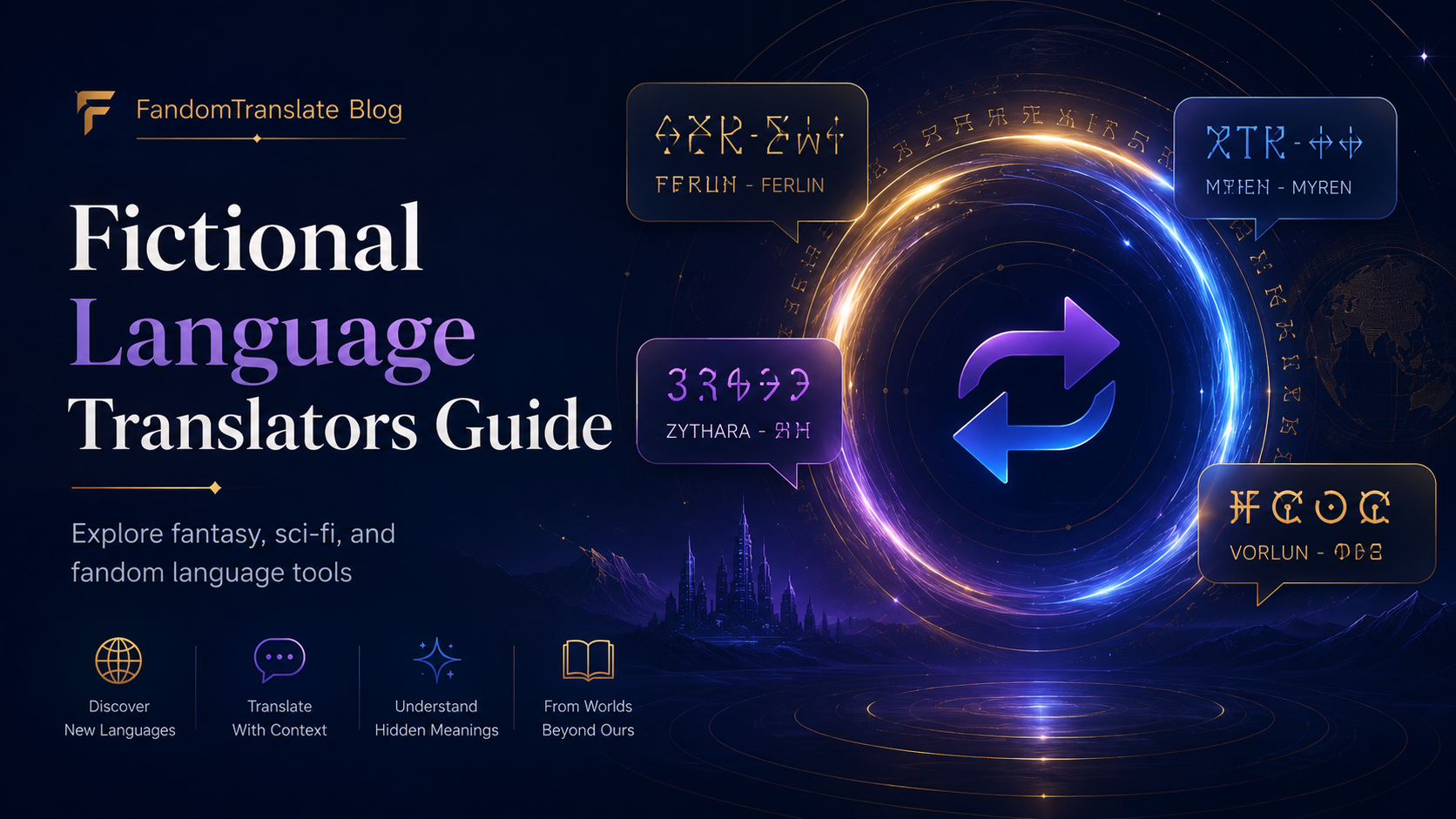
Best Fictional Language Translators for Fantasy and Fandom Fans
FandomTranslate Guide
The best fictional language translators are the ones that match the mood, fandom feel, and creative purpose of your text. A dragon command needs a different style from a sci-fi greeting, a fantasy name, or a Star Wars-inspired alphabet design.
FandomTranslate’s Fictional Language Translators page brings fantasy, sci-fi, and fandom-inspired tools together so fans can quickly browse the right option. Some tools are best for dramatic fantasy phrases. Others work better for warrior-style captions, alien greetings, dark villain lines, or fictional alphabet text.
This guide compares the most useful fictional language translators by use case. It also explains accuracy limits, canon concerns, and practical ways to use these tools for roleplay, writing, usernames, captions, and worldbuilding without treating creative output as official translation.
Fictional language translators are tools that convert normal text into fantasy, sci-fi, fandom-inspired, or fictional alphabet styles. They are useful for writers, fans, roleplayers, gamers, and creators who want themed names, phrases, captions, or lore text. Choose one based on the mood you want, such as dragon fantasy, warrior language, alien sci-fi, dark villain style, or symbol-based text.
Basics
What Are Fictional Language Translators?
Fictional language translators are online tools that turn ordinary text into text inspired by invented languages, fantasy cultures, sci-fi worlds, coded alphabets, or fandom-style speech.
Some fictional language tools focus on a specific fantasy or sci-fi feel, such as High Valyrian, Dothraki, Elvish, Klingon, or Sith-inspired phrasing. Others work more like alphabet converters, where the main goal is visual style rather than grammar. Aurebesh is a good example because users often want Star Wars-style alphabet text for designs, usernames, captions, or fan projects.
Fantasy Phrases
Dragon commands, magical captions, royal mottos, guild names, and lore snippets.
Roleplay Text
Character lines, battle cries, alien greetings, game captions, and faction text.
Visual Alphabets
Symbol-based text, sci-fi labels, fan graphics, usernames, and display designs.
These tools are best used as creative helpers. They can make text feel more immersive, but they should not be treated as official language sources or guaranteed canon translations.
Use Cases
Why Fantasy and Fandom Fans Use Fictional Language Translators
Fans create quick themed text
A fan may want a short dragon command, fantasy greeting, villain quote, or sci-fi username. A translator gives them a fast starting point.
Writers add atmosphere
Fictional language tools can help with character names, chapter titles, magic phrases, clan names, and invented ceremonies.
Roleplayers build identity
Roleplay communities often need names, battle cries, greetings, guild titles, and in-character captions.
Creators improve visual content
Caption writers, editors, designers, streamers, and username creators use fandom tools to make short text more memorable.
Selection Guide
How to Choose the Right Fictional Language Translator
The best fictional language translator depends on what you are trying to create. Start with the feeling you want, then choose the tool that matches that mood.
High Valyrian: dragon court, ancient fire, noble fantasy, royal lines, and house mottos.
Dothraki: horse-lord energy, warrior phrases, battle captions, and clan-style text.
Elvish: magical forest tone, graceful fantasy names, elegant phrases, and poetic captions.
Klingon: alien warrior style, space combat, sci-fi pride, and bold crew phrases.
Sith: dark power, villain lines, dramatic threats, and shadow-themed roleplay.
Aurebesh: Star Wars-style written symbols, sci-fi labels, posters, usernames, and visual designs.
Best Tools
Best Fictional Language Translators by Use Case
Best for dragon fantasy phrases
Use the High Valyrian Translator for dragon commands, royal fantasy lines, ancient house mottos, and noble-sounding phrases.
Best for warrior-style text
Use the Dothraki Translator for harsh, direct, battle-ready phrases, clan names, and warrior sayings.
Best for magical fantasy names
Use the Elvish Translator for elegant fantasy names, poetic captions, magical phrases, and peaceful worldbuilding text.
Best for sci-fi warrior energy
Use the Klingon Translator for alien warrior-style text, sci-fi greetings, battle lines, and starship crew phrases.
Best for dark villain lines
Use the Sith Translator when you want dramatic, ominous, dark-side-inspired text for villains and shadow-themed characters.
Best for Star Wars-style alphabet text
Use the Aurebesh Translator when the goal is visual style, sci-fi labels, fan graphics, or fictional alphabet text.
Comparison
Comparison Table of Fictional Language Tools
| Translator | Best For | Style or Fandom Feel | Good Example Use | Accuracy / Use Note |
|---|---|---|---|---|
| High Valyrian Translator | Dragon commands, noble fantasy phrases, royal house lines | Ancient, grand, dragon-linked fantasy | Guard the dragon throne | Use for creative fantasy styling; do not treat output as official canon translation. |
| Dothraki Translator | Warrior phrases, battle captions, clan-style text | Harsh, direct, nomadic warrior energy | Ride with courage | Works best with short, bold phrases rather than modern paragraphs. |
| Elvish Translator | Fantasy names, magical phrases, poetic captions | Elegant, mystical, forest-fantasy feel | Song of moonlight | Good for creative fantasy tone; review names before using them in major projects. |
| Klingon Translator | Sci-fi warrior lines, alien greetings, bold crew phrases | Strong, proud, alien warrior style | Victory honors the crew | Useful for fandom-inspired text, but not a substitute for expert language study. |
| Sith Translator | Villain lines, dark captions, dramatic fantasy or sci-fi text | Dark, intense, power-focused tone | The shadow chooses strength | Best for dramatic style; avoid assuming exact grammar or canon wording. |
| Aurebesh Translator | Star Wars-style alphabet text, labels, designs, captions | Symbolic, futuristic, galactic writing style | Secret rebel message | Mainly useful as a fictional alphabet style, not a full spoken-language translation. |
Examples
Examples Table for Different User Goals
| User Goal | Best Translator to Try | Example Phrase Idea | Why It Fits |
|---|---|---|---|
| Dragon command | High Valyrian Translator | Rise, dragon of fire | Fits dragon fantasy, ancient power, and noble command scenes. |
| Warrior phrase | Dothraki Translator | Ride beyond fear | Suits bold, physical, warrior-centered phrases. |
| Fantasy name | Elvish Translator | Silverleaf Keeper | Works well for graceful names, magical titles, and fantasy identities. |
| Sci-fi greeting | Klingon Translator | Honor to your crew | Gives the phrase a strong alien warrior tone. |
| Dark villain line | Sith Translator | Power waits in shadow | Fits dramatic, threatening, dark-side character speech. |
| Star Wars-style alphabet text | Aurebesh Translator | Hidden rebel signal | Ideal when the goal is a visual alphabet style. |
| Roleplay caption | Dothraki Translator | The rider returns at dawn | Gives roleplay text a rough, cinematic warrior feel. |
| Guild name | Elvish Translator | Order of the Moon Gate | Works well for fantasy groups, clans, and magical societies. |
| Username idea | Sith Translator | Shadow Vow | Short dark phrases are memorable for villain-themed usernames. |
| Worldbuilding phrase | High Valyrian Translator | The old flame remembers | Fits ancient lore, royal history, and dragon-linked worldbuilding. |
Accuracy
Accuracy, Canon, and Creative-Use Limitations
Fictional language translators are helpful, but they have limits. Many fictional languages have partial vocabularies, fan interpretations, style-based rules, or incomplete public grammar. Some tools are designed to create a themed result rather than a perfect linguistic translation.
A translator can help create a phrase that feels right for a fandom style, but that does not make the result official. This matters for users who want text for published fiction, serious fan projects, branding, merchandise, or permanent designs.
Some fictional languages are more developed than others. Klingon has a more detailed language tradition than many fictional tongues. Other fandom-inspired tools may rely more on style, mood, known vocabulary, or creative conversion.
For casual use, a translator result may be enough. For serious use, review the output for tone, spelling, readability, and context. If the phrase is important, keep it short and simple.
Short Phrases
Why Short Phrases Usually Work Better Than Long Paragraphs
Short phrases are easier for fictional language translators to handle. They usually produce cleaner, more useful, and more memorable results.
A phrase like Guard the gate is easier to style than a long modern sentence full of timing, explanation, slang, and complex structure. Short phrases also look better in usernames, captions, art, fan edits, and roleplay posts.
Good short phrase formats
Rise, dragon
Honor the fallen
Guard the stars
Moonlight guides us
Power answers strength
The rider returns
Fire remembers
Victory has a price
Phrases to avoid
Long jokes
Slang-heavy sentences
Modern brand references
Full paragraphs
Complicated instructions
Mixed fandom references in one phrase
Writing Use
How Writers and Worldbuilders Can Use These Tools Responsibly
Fictional language translators can be useful for writers, but they work best as creative prompts rather than final authority. A translator can help you find a tone for a kingdom, clan, order, alien race, guild, or magic system. Use the result as a starting point, then edit it to fit your own story.
If you are building a fictional culture, avoid changing style every time. Decide what kind of sound, rhythm, and tone your culture uses, then keep names and phrases consistent across characters, places, and titles.
Do not rely on copied movie, show, game, or book dialogue. Original phrases are safer and more useful. Instead of copying a known quote, write your own phrase that fits the same emotional purpose.
Match language style to culture. A peaceful forest culture should not sound like a brutal war camp, and a dark empire should not sound like a gentle elven kingdom.
Mistakes
Common Mistakes When Using Fictional Language Translators
| Mistake | Why It Happens | Better Approach |
|---|---|---|
| Expecting perfect canon translation | Users assume every fictional language has complete grammar and vocabulary. | Treat the result as creative or fandom-inspired unless verified by a reliable language source. |
| Using long modern paragraphs | Users paste full scenes or complex explanations into the tool. | Use short, clear phrases with simple wording. |
| Confusing fictional languages with decorative fonts | Some outputs are language-style translations, while others are alphabet or symbol conversions. | Decide if you want a phrase style or a visual alphabet effect. |
| Using output for official or permanent use without review | The text may look good but still need checking. | Review spelling, meaning, style, and context before using it in important projects. |
| Treating style-based output as exact grammar | Some tools prioritize tone and fandom feel. | Use style-based results for creative captions, names, and roleplay, not formal language study. |
| Choosing the wrong translator for the intended fandom feel | Users pick a famous tool even when it does not match the scene. | Match the translator to the mood: dragon, warrior, elven, sci-fi, dark, or symbol-based. |
Practical Tips
Tips for Choosing the Right Fictional Language Translator
Start with the fandom or style you want before choosing a tool.
Use short phrases instead of long paragraphs.
Use High Valyrian for dragon, royal fantasy, or ancient nobility feel.
Use Dothraki for warrior-style phrases, battle captions, and rough clan energy.
Use Elvish for magical fantasy names, graceful phrases, and poetic text.
Use Klingon for sci-fi warrior-style text and alien battle phrases.
Use Sith for dark dramatic lines, villain captions, and shadow-themed characters.
Use Aurebesh for Star Wars-style alphabet designs, labels, and visual fan text.
Main Hub
When to Use the Main Tool
Use the Fictional Language Translators page when you want to browse fantasy, sci-fi, and fandom-inspired translators in one place. It is the best starting point if you are not sure which tool fits your idea yet.
The category page helps you compare different translator styles before choosing a specific one. That is useful when your goal is broad, such as creating a fantasy username, naming a guild, writing a roleplay caption, styling sci-fi text, or testing several fandom-inspired options.
Related Tools
Related Translator Links
High Valyrian Translator
Use this for dragon commands, royal fantasy phrases, and noble-sounding text.
Dothraki Translator
Use this for warrior phrases, battle captions, clan names, and bold roleplay lines.
Elvish Translator
Use this for magical fantasy names, poetic phrases, and graceful worldbuilding text.
Klingon Translator
Use this for sci-fi warrior lines, alien greetings, starship phrases, and bold fandom text.
Sith Translator
Use this for dark villain lines, dramatic captions, and shadow-themed character dialogue.
Aurebesh Translator
Use this for Star Wars-style alphabet text, fan graphics, labels, and visual designs.
Fun Translators
Use this page when you want playful text converters, joke styles, and casual creative tools.
Historical Language Translators
Use this page for old, classical, or history-inspired translation styles.
FAQs
FAQs About Fictional Language Translators
What is a fictional language translator?
A fictional language translator is a tool that converts normal text into a fantasy, sci-fi, fandom-inspired, or fictional alphabet style. It can help users create themed phrases, names, captions, roleplay text, and creative writing ideas.
Which fictional language translator is best for fantasy writing?
The best option depends on the tone of the scene. High Valyrian works well for dragon and royal fantasy. Elvish works well for magical and graceful fantasy. Dothraki fits warrior-style phrases and rough clan energy.
Which translator is best for dragon phrases?
The High Valyrian Translator is usually the best choice for dragon phrases, dragon commands, ancient fire themes, royal fantasy text, and noble house-style lines.
Are fictional language translators official?
No. Fictional language translators should not be treated as official unless a specific source clearly says so. Most online tools are creative, fandom-inspired, or style-based helpers.
Can I use fictional language translators for names?
Yes. They are useful for character names, guild names, usernames, clan names, fantasy places, magic titles, and roleplay identities. Keep names short so they are easier to read and remember.
What is the difference between fantasy and sci-fi translators?
Fantasy translators usually fit magic, kingdoms, dragons, elves, warriors, and ancient lore. Sci-fi translators fit alien cultures, starships, space battles, futuristic factions, and fictional writing systems.
Are these translations always accurate?
No. Accuracy can vary depending on the language, available vocabulary, grammar rules, and tool style. Use the output as a creative starting point, especially for casual fandom content and roleplay.
Can I use these tools for roleplay?
Yes. Fictional language translators are useful for roleplay captions, character greetings, battle lines, guild names, faction slogans, and short in-character phrases.
Which translator is best for Star Wars-style text?
The Aurebesh Translator is best for Star Wars-style alphabet text. It is especially useful for visual designs, labels, fan graphics, captions, and sci-fi display text.
Which translator is best for Tolkien-inspired fantasy text?
The Elvish Translator is usually the best fit for Tolkien-inspired fantasy text, magical names, graceful phrases, forest-themed captions, and elegant fantasy worldbuilding.
Explore Fictional Language Translators
Browse the Fictional Language Translators page to compare fantasy, sci-fi, and fandom-inspired tools, then choose the translator that best matches your phrase, character, scene, or creative project.
Browse Fictional Language Translators →